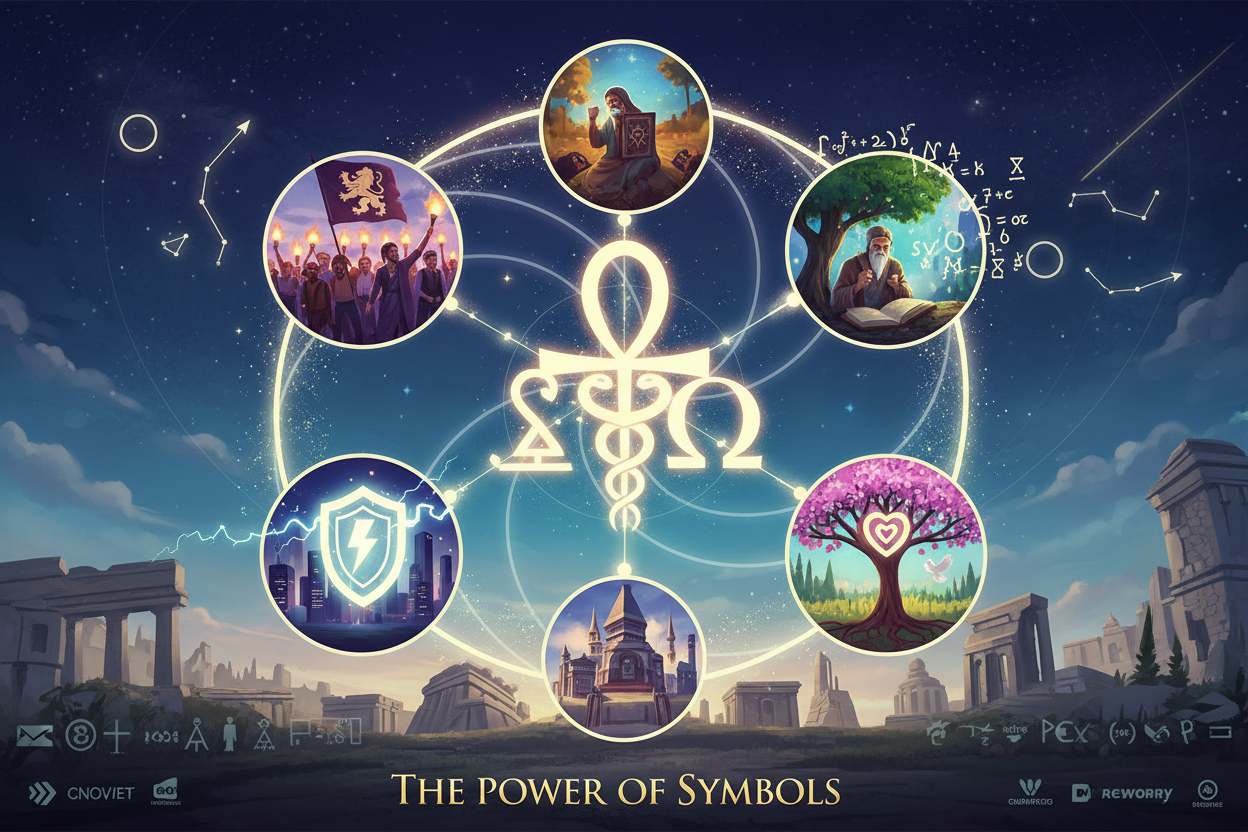
Symbols are more than decoration—they’re visual language. The power of symbols is that a single image can carry identity, protection, belonging, and transformation all at once. In this guide, you’ll learn why humans still wear symbols today, how they work (psychology + spirituality), and how to choose the right one for your season.
Symbols are a shortcut to meaning — a visual language that can say who you are, what you’ve lived through, and what you’re calling in next.
That’s why symbols show up everywhere: in ancient temples and modern tattoos, on jewelry and streetwear, in spiritual practices and everyday identity. We don’t just like symbols. We use them to remember, to protect, to transform, and to belong.
Quick answer: what is the power of symbols?
The power of symbols is that they carry meaning in a single image. They work on two levels at once:
- Psychology/identity: symbols reinforce who you are and what you stand for.
- Spiritual/intention: symbols can be used as talismans — reminders, boundaries, and anchors for your energy.
In other words: a symbol can be a mirror and a compass.
What is a symbol (really)?
A symbol is an image, shape, or sign that represents something bigger than itself — an idea, a value, a story, a belief, or a state of being.
Unlike a simple label, a symbol is layered. It can hold:
- history and culture
- personal memory
- emotion and identity
- spiritual intention
That’s why two people can wear the same symbol and feel something different — and still both be “right.”
The power of symbols in psychology and identity
1) Symbols make meaning fast
Your brain loves patterns. A symbol compresses a big message into something your mind can recognize instantly.
That’s why symbols are so memorable — they’re like mental shortcuts for:
- courage
- protection
- rebirth
- love and loyalty
- guidance
2) Symbols help you become who you’re choosing to be
We don’t just wear clothes for warmth. We wear them for identity.
A symbol can act like a daily cue that reinforces your self-image:
- I protect my peace.
- I keep going.
- I’m rebuilding.
- I trust my intuition.
This is one reason symbolic streetwear feels different from “just a graphic.” It’s not only style — it’s self-definition.
3) Symbols create belonging
Symbols are shared language. They help people find their tribe.
Whether it’s a spiritual symbol, a cultural emblem, or a sign of transformation, symbols can communicate:
- “I get it.”
- “I’ve been there.”
- “This is what I stand for.”
Symbols as protection: boundaries, talismans, and intention
Many traditions treat symbols as more than meaning — they treat them as protective tools.
Even if you’re not deeply spiritual, you’ve probably felt this: some objects feel like anchors. Some images feel like shields. Some reminders keep you steady.
What is a talisman?
A talisman is something you carry or wear to represent protection, luck, guidance, or power. It’s less about superstition and more about intention.
A symbol becomes talismanic when you use it to:
- set a boundary
- hold a focus
- protect your energy
- remember your path
Why protection symbols are so popular
Protection is universal. People reach for protection symbols when they’re:
- overwhelmed
- starting over
- healing
- stepping into visibility
- navigating change
Protection symbols can be a way of saying: “I’m open — but not unguarded.”
How to choose a symbol (using the power of symbols framework)
If you’re new to symbolic meaning, this is an easy way to choose a symbol that fits your season.
1) Protection + boundaries
For shielding, clarity, and energetic hygiene.
- Eye of Horus (protection, restoration, clear sight)
- Hamsa / Evil Eye (blessing, deflection, boundaries)
- Helm of Awe (presence, courage, protection)
2) Guidance + resilience
For wayfinding, focus, and staying true to your path.
- Vegvísir (guidance, resilience, “I won’t lose my way”)
3) Transformation + rebirth
For reinvention, courage, and becoming.
- Ankh (life force, vitality, spiritual protection)
- Valknut (courage, fate, transformation)
4) Connection + roots
For grounding, belonging, and growth.
- Celtic Tree of Life (roots, balance, connection)
5) Creation + harmony
For alignment, sacred structure, and interconnectedness.
- Flower of Life (creation, harmony, sacred geometry)
How to choose a symbol that fits you
Try this simple method:
- Name your season: protection, guidance, transformation, connection, or harmony.
- Choose your message: what do you want to remember when life gets loud?
- Pick the symbol that feels like relief: the one that makes you exhale.
- Wear it consistently: symbols become stronger when they become part of your rhythm.
If you want a shortcut: choose the symbol that describes what you’re learning right now.
Common misconceptions about symbols
“A symbol has only one meaning.”
Most symbols have layers. Context matters: culture, history, and personal experience all shape meaning.
“If it’s not historically perfect, I can’t wear it.”
Respect matters — but so does awareness. Learn the origin, avoid overclaims, and wear it with intention.
“Symbols are either spiritual or psychological.”
They can be both. A symbol can be meaningful as identity reinforcement and as a spiritual anchor.
Symbol glossary (start here)
Use these guides to go deeper:
- Hamsa vs Evil Eye
- Flower of Life Meaning
FAQ: the power of symbols
Why are symbols so powerful?
Symbols are powerful because they compress complex meaning into a single image. They help people remember values, reinforce identity, and set intention.
Do symbols have spiritual power?
Many people experience symbols as spiritually meaningful — especially when used with intention as reminders, boundaries, or talismans. Others connect with symbols psychologically, as identity anchors. Both approaches can be valid.
What are the most common protection symbols?
Some widely recognized protection symbols include the Eye of Horus, Hamsa, Evil Eye, and protective staves like the Helm of Awe.
How do I choose the right symbol for me?
Start with what you need most right now (protection, guidance, transformation, connection, harmony). Then choose the symbol whose meaning feels like a message you want to carry daily.
Can symbols mean different things in different cultures?
Yes. Symbols can shift in meaning across time, place, and tradition. It’s always worth learning the origin and being mindful with cultural context.
Wear a symbol. Carry a message.
At Black Rainbow Caps, we create art-driven caps inspired by symbols because we believe style can be meaningful. Each design is a wearable reminder — a small talisman for your everyday life.
If you’re exploring symbols for protection, guidance, or transformation, start with the guides above — and when you find your symbol, wear it like a signature.