
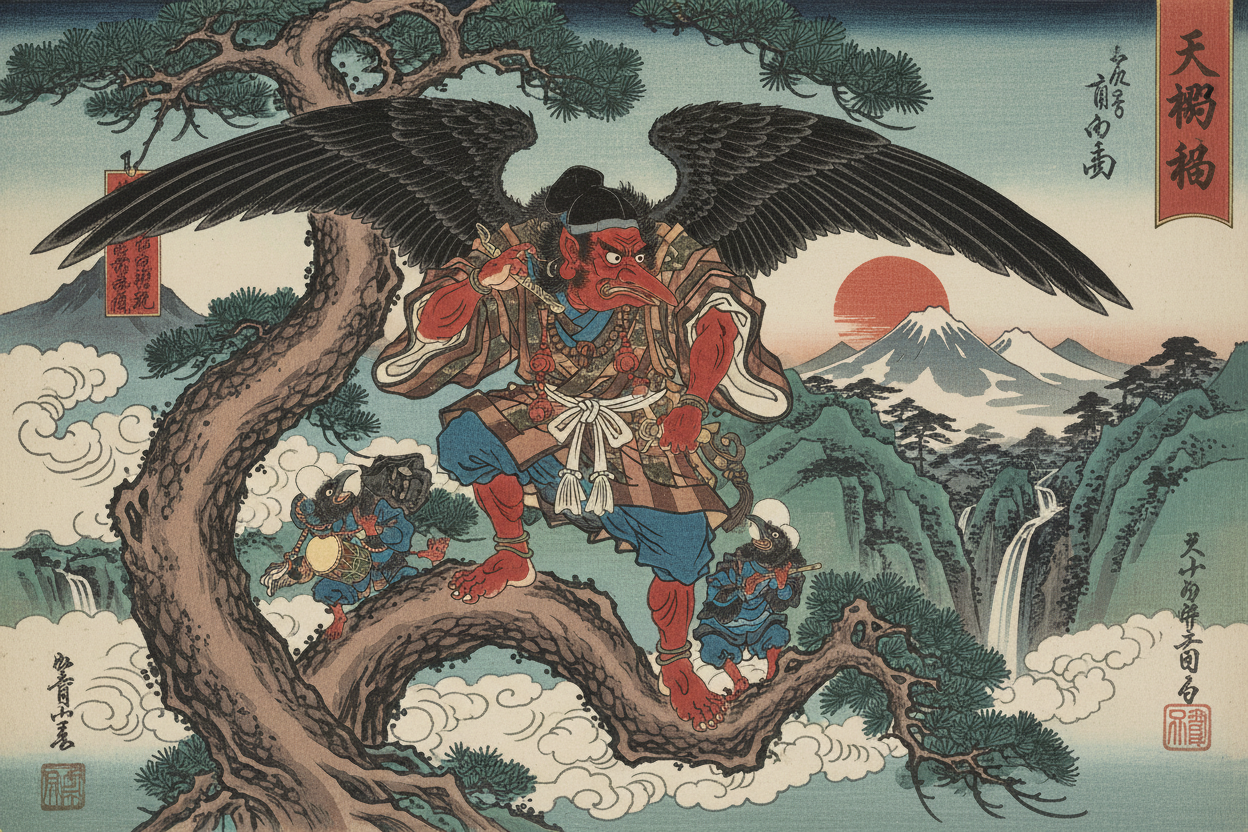
What is Tengu meaning?
Tengu (天狗) are famous figures in Japanese folklore often described as yōkai—supernatural beings that can range from mischievous to protective, depending on the story. So what’s the Tengu meaning? The word tengu is commonly translated as “heavenly dog,” but the image most people recognize isn’t canine at all: it’s a sharp, birdlike warrior spirit (often linked to mountain regions), sometimes shown with wings, a beak, or a long nose.
In Japanese tradition, yōkai aren’t automatically “good” or “bad.” They’re forces. Warnings. Teachers. Mirrors. Tengu stories live in that space—where the supernatural isn’t here to comfort you, but to test what you’re made of.
The Misunderstanding
A lot of Western interpretations label Tengu as “evil demons.” That framing usually comes from two places:
- Translation shortcuts: “Demon” gets used as a catch-all for anything supernatural.
- Christianized good-vs-evil filters: If a spirit punishes arrogance or leads people astray, it gets stamped as “bad.”
But in Japanese nuance, Tengu are closer to dangerous guardians than villains. They can humble the arrogant, punish disrespect, and disrupt hypocrisy—but they also protect sacred places, enforce discipline, and reward sincerity.
If you’re looking for a clean moral label, Tengu won’t give you one.
Tengu’s Dual Nature
If you’re searching “What does Tengu symbolize?” here’s the cleanest answer:
- Tengu symbolizes disciplined power, protection through testing, and the refusal to tolerate weakness disguised as ego.
A Tengu guardian isn’t a soft protector. It’s the kind that stands at the gate and asks: Are you serious?
In folklore, Tengu are often connected to:
- Guardianship of mountains and sacred spaces
- Punishment of arrogance and corruption
- Trials that break illusions (especially self-importance)
They protect what matters by confronting what’s false.
Tengu meaning in Martial Tradition
Tengu show up again and again in stories tied to warriors, ascetics, and mountain training.
Historically, they’re associated with yamabushi (mountain ascetics) and the idea of spiritual discipline forged through harsh practice. In that context, Tengu become a symbol of:
- Training beyond comfort
- Mastery earned, not claimed
- Respect for the path (not the performance)
That’s why warriors and practitioners didn’t just fear Tengu—they respected them. A Tengu isn’t impressed by your image. Only your code.
Tengu meaning in Tattoo Culture
If you’re searching “Tengu tattoo meaning,” you’ll see the same themes repeat across classical and modern work:
- Warrior discipline
- Protection through strength
- A warning against arrogance
- A spirit that tests the wearer
In irezumi and Japanese-inspired tattoo culture, Tengu imagery often sits comfortably beside other symbols of Bushidō-adjacent values: courage, restraint, loyalty, and self-mastery.
Wearing (or tattooing) Tengu isn’t about looking dangerous. It’s about declaring you’re willing to be held to a standard.
What It Means to Wear Tengu
Tengu energy is not “group approval” energy.
To wear Tengu is to signal:
- Discipline over hype
- Strength with restraint
- Comfort with solitude (standing alone when you have to)
- Respect for codes—spoken or unspoken
It’s a symbol for people who don’t need to explain themselves. They just live it.
Classical Tengu prints

Tsukioka Yoshitoshi, December 1865 — A young Minamoto no Yoshitsune (Ushiwaka Maru) trains under Sōjōbō, the King of the Tengu, on Mount Kurama. Japanese color woodblock print (oban tate-e triptych), published by Mori-ya Jihei.
Meaning tie-in: This is the Tengu as teacher—discipline forged in the mountains, not “evil” for the sake of it.
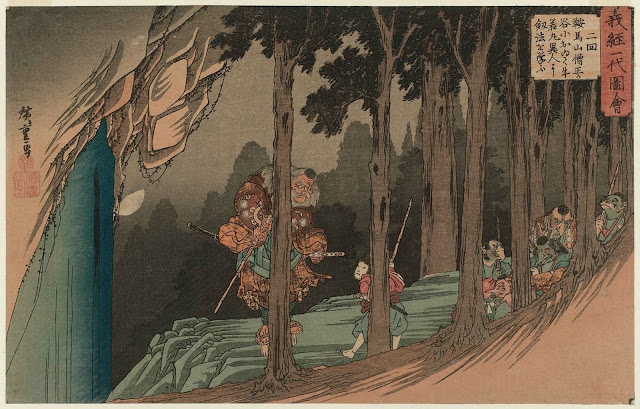
Utagawa Hiroshige, c. 1832–1836 — Yoshitsune’s legendary training scene: Sōjōbō directs the lesson while lesser Tengu duel midair in the valley near Mount Kurama. Color woodblock print (nishiki-e), published by Tsuruya Kiemon (Senkakudō).
Meaning tie-in: The Tengu here isn’t a villain—it’s a gatekeeper of skill, demanding focus, restraint, and respect for the code.
Related Symbols
If Tengu speaks to you, you may also connect with other protection-and-warrior symbols across cultures:
- Norse warrior protection: Valknut, Vegvísir, Helm of Awe (strength, guidance, resolve)
- Celtic guardianship: Tree of Life (endurance, rooted power, protection through balance)
- Protective talismans: Evil Eye, Hamsa (warding, awareness, spiritual defense)
Different cultures. Same message: protection isn’t passive.
Shop the Tengu Collection
If you’re ready to carry that code, start here:
- Then explore the Samurai hat
- Or browse the full Tattoo collection
This is wearable symbolism—built for people who move with intention.